
What Is the Myelin Sheath and How Can Damage to It Affect Peripheral Neuropathy?
The Drugless Doctors Approach to Myelin Integrity, Inflammation, Fatty Acids & Sensory Nerve Function

Introduction
The myelin sheath is the protective outer covering surrounding many nerves in the body. It functions similarly to insulation around an electrical wire and plays a major role in helping nerves communicate efficiently and rapidly.
When the myelin sheath becomes irritated, inflamed, weakened, or damaged, nerve communication may become disrupted. This may contribute to:
• tingling
• numbness
• burning sensations
• weakness
• altered sensation
• balance instability
• slowed nerve signaling
• sensory decline
In some individuals, damage involving the myelin sheath may become a major contributor to peripheral neuropathy physiology.
Peripheral Neuropathy & Brain-Like Degeneration
I often explain to patients that peripheral neuropathy may resemble “Alzheimer’s or dementia involving the hands and feet.”
Just as cognitive decline may involve impaired communication involving the brain, peripheral neuropathy may involve impaired communication involving the sensory nerves.
When nerves lose their protective integrity and signaling efficiency, communication between the feet, hands, and brain may become distorted, slowed, hypersensitive, or diminished.
What Damages the Myelin Sheath?
Multiple factors may contribute to myelin stress or degeneration including:
• chronic inflammation
• glucose instability
• oxidative stress
• vitamin deficiencies
• toxicity
• mitochondrial dysfunction
• autoimmune physiology
• poor circulation
• chronic inflammatory foods
• poor fatty acid balance
• oxidative damage involving nerve tissue
The myelin sheath is highly dependent upon healthy fats and fatty acid stability. Healthy omega-3 oils are important because they help support cell membrane integrity, nerve tissue physiology, and anti-inflammatory pathways.
Conversely, excessive omega-6 oils may contribute to inflammatory physiology when consumed in excess. The balance between omega-3 and omega-6 fatty acids becomes extremely important involving nerve health, inflammatory regulation, and tissue recovery physiology.
Inflammatory Oils & Fatty Acid Physiology
One of the downstream evaluations that may provide additional insight into inflammatory physiology involves fatty acid serum analysis.
This type of testing may help evaluate inflammatory oil patterns involving arachidonic acid and linolenic acid balance together with overall fatty acid physiology.
In “Dr. Bob’s Guide to Stop ADHD in 18 Days,” a key discussion is how trans fatty acids, and partially hydrogenated oils may negatively influence healthy cellular membrane function.
These man-made oils may sabotage the body’s ability to efficiently utilize healthy omega-3 oils. Downstream, this may impair the production of healthy prostaglandins involved in inflammation regulation and pain modulation physiology.
One of the important physiologic concepts involving trans fats is their prolonged half-life within the body. It has been discussed that the half-life of trans fats may be approximately 51 days. In practical terms, this means that after 51 days, approximately half of the physiologic negative influence from that oil may remain within the body.
Even after approximately 102 days, residual effects involving those inflammatory oils may still be present. When individuals repeatedly consume processed foods, partially hydrogenated oils, or excessive trans fats, they may continuously interfere with the body’s healthy fatty acid balance and membrane physiology.
By comparison, healthier cis-fatty acids have been discussed as having a much shorter physiologic half-life, approximately 18 days. During the pilot nutritional program involving my ADHD book, we observed meaningful improvements in many patients within approximately 18 days after improving dietary fat quality and reducing inflammatory food exposure.
Physiologically, the body possesses remarkable healing and recovery potential when healthier nutritional and inflammatory conditions are restored.
Diet has a profound impact on virtually every bodily function including circulation, mitochondrial physiology, inflammatory balance, myelin integrity, and nerve health.
Simply stated:
“You are what you eat.”
Vitamin D & Nerve Physiology
I have commonly observed low vitamin D levels in individuals experiencing multiple sclerosis patterns, inflammatory neurologic conditions, and peripheral nerve dysfunction.
Vitamin D plays important roles involving:
• immune regulation
• inflammatory balance
• neurologic signaling
• mitochondrial physiology
• tissue repair
• nerve health
Low vitamin D status may contribute to inflammatory stress physiology and impaired tissue recovery involving the nervous system.
Myelin Damage & Peripheral Neuropathy
A damaged myelin sheath may impair how nerves communicate with the brain and body.
When myelin becomes damaged:
• nerve signaling may slow
• burning sensations may increase
• numbness may worsen
• sensory loss may occur
• coordination may decline
• balance instability may increase
• altered temperature perception may develop
In some individuals, neuropathy symptoms may reflect both nerve irritation and impaired myelin integrity simultaneously.
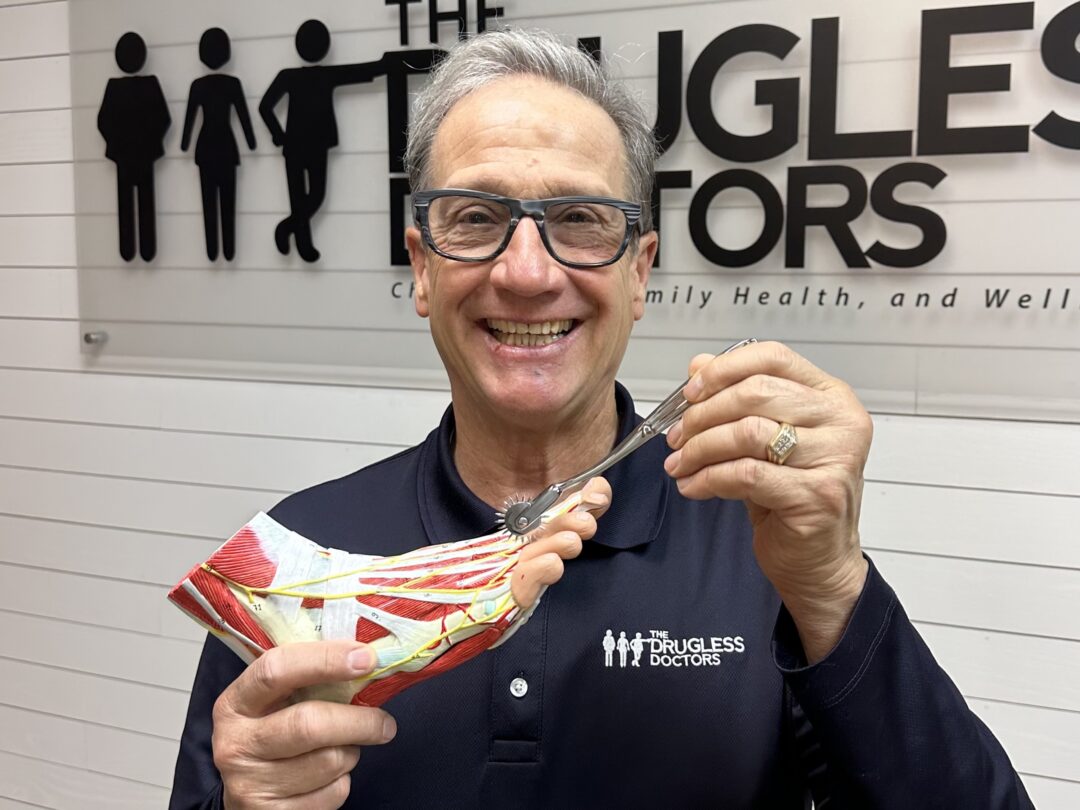
How We Evaluate Nerve Function in the Office
The sensory examination utilized in the practice is designed to help evaluate outer sensory nerve integrity, circulation physiology, and altered neurologic response patterns.
The evaluation may include:
• tuning fork evaluation
• pinwheel sensory testing
• light touch assessment
• hot and cold sensory evaluation
• Medi-Tip sensory evaluation
• gait observation
• balance testing
• thermographic circulation imaging
• nitric oxide testing
• circulation observations
These evaluations may provide insight regarding:
• altered nerve signaling
• sensory decline
• abnormal temperature perception
• circulation dysfunction
• nerve hypersensitivity
• proprioceptive instability
• impaired sensory awareness
One of the more interesting findings observed in some neuropathy patients involves altered temperature perception. Patients may occasionally perceive heat or burning sensations when cool stimulation is applied to the feet. This may suggest irritated sensory tissue or altered neurologic processing involving the peripheral nerves.
The Drugless Doctors Three-Tier Supportive Strategy
The Drugless Doctors approach focuses on supporting circulation, nerve physiology, sensory stability, mitochondrial activity, and tissue recovery rather than simply masking symptoms.
Tier 1 — Biochemical Support
The biochemical tier focuses on improving the internal physiologic environment surrounding the nerves and myelin tissue.
The objective is supporting:
• fatty acid balance
• inflammatory regulation
• glucose stability
• antioxidant protection
• mitochondrial activity
• vitamin status
• nutritional stability
• liver physiology
• detoxification pathways
Supportive strategies may include:
• improving healthy fat intake
• reducing inflammatory oils
• improving nutritional stability
• supporting nitric oxide physiology
• supporting mitochondrial function
• reducing inflammatory burden
Tier 2 — Biovascular Support
The biovascular tier focuses on circulation, oxygen delivery, nitric oxide physiology, and microcirculation involving sensory tissue.
One of the foundational supportive modalities utilized in the practice is FDA-cleared photobiomodulation therapy using the 15-watt TheraRay device.
Photobiomodulation is designed to support:
• circulation
• tissue oxygenation
• mitochondrial activity
• nitric oxide physiology
• ATP production
• cellular energy production
• microcirculation
• recovery physiology
Healthy circulation and oxygen delivery are critical because nerves and myelin tissue are highly metabolically active.
Tier 3 — Biostructural Support
The biostructural tier focuses on:
• balance stability
• gait mechanics
• proprioception
• neurologic communication
• sensory awareness
• movement patterns
• supportive nerve recovery physiology
This tier may include supportive sensory stimulation strategies, gait observations, structural evaluation concepts, and nerve re-education physiology.
When Further Evaluation May Be Appropriate
If you are experiencing:
• tingling
• numbness
• burning sensations
• altered temperature perception
• balance instability
• weakness
• gait hesitation
• sensory decline
• cold feet or hands
• coordination changes
these findings may suggest altered sensory nerve physiology, circulation dysfunction, inflammatory stress, or impaired myelin integrity.
The earlier these physiologic stress patterns are identified and supported, the greater the opportunity for improving circulation, sensory stability, tissue oxygenation, and nerve recovery physiology.
Patient Summary
The myelin sheath plays a critical role in protecting nerves and allowing proper nerve communication throughout the body.
When the myelin sheath becomes irritated, inflamed, weakened, or damaged, neuropathy symptoms such as tingling, burning, numbness, altered sensation, and balance instability may develop.
Diet, inflammatory oils, fatty acid balance, glucose stability, circulation, vitamin status, and inflammatory physiology all play important roles involving nerve health and myelin integrity.
The Drugless Doctors approach focuses on supporting circulation, oxygen delivery, inflammatory balance, mitochondrial physiology, sensory stability, and overall nerve recovery physiology.
References
- National Institute of Neurological Disorders and Stroke (NINDS). Peripheral Neuropathy Fact Sheet.
- Mayo Clinic Staff. Multiple sclerosis and peripheral neuropathy resources.
- Callaghan BC, Cheng HT, Stables CL, Smith AL, Feldman EL. Diabetic neuropathy. Lancet Neurol. 2012.
- Simopoulos AP. Omega-3 fatty acids in inflammation and autoimmune diseases.
- Ignarro LJ. Nitric oxide as a unique signaling molecule in the vascular system. Proc Natl Acad Sci USA. 1992.
- Bryan NS, Loscalzo J. Nitric Oxide and the Cardiovascular System.
- Hamblin MR. Mechanisms and applications of photobiomodulation. AIMS Biophys. 2017.
- Oyenihi AB, et al. Mitochondrial oxidative stress in diabetes and neuropathy. Int J Mol Sci. 2015.
Schedule Your Neuropathy Appointment
Schedule an evaluation to see if neuropathy will work for you.