
What Is The Drugless Doctors Approach to Peripheral Neuropathy?
Comprehensive Neuropathy Evaluation, Circulation Assessment, Sensory Testing & Drugless Supportive Care
Introduction
Peripheral neuropathy is one of the most overlooked and misunderstood conditions affecting adults today. Many individuals are told they simply have “neuropathy” without anyone fully explaining why the nerves are being damaged.
In our practice, the focus is not simply masking symptoms, but evaluating circulation, microvascular stress, metabolic instability, inflammation, sensory loss, oxygen delivery, nitric oxide physiology, and whole-body recovery patterns.
Many patients suffering from tingling, burning, numbness, balance loss, cold feet, or sensory decline are experiencing impaired circulation and nerve irritation long before severe disability develops.
Common Contributors to Peripheral Neuropathy
- Diabetes and glucose instability
- Chemotherapy-related nerve damage
- Lyme disease
- Inflammation and oxidative stress
- Reduced nitric oxide physiology
- Impaired microcirculation
- B12 deficiency
- Chemical exposure
- Obesity and metabolic syndrome
- Poor circulation
- Mitochondrial fatigue
- Chronic inflammatory stress
Neuropathy Severity Evaluation
The neuropathy severity evaluation utilized in the practice measures multiple sensory pathways involving the hands and feet.
Each sensory category is graded to help determine the overall percentage of sensory loss and nerve impairment.
This evaluation helps determine whether the nerve damage pattern appears acute, moderate, severe, or approaching permanent sensory impairment.
How We Evaluate Peripheral Neuropathy in the Office
One of the major differences in our practice is that we objectively evaluate sensory loss, circulation, temperature changes, and nerve signaling using multiple testing procedures.
The evaluation commonly includes:
• cold sensation testing
• pinwheel testing
• 10g monofilament testing
• vibration testing
• cool and hot sensation testing
• sharp sensation testing
• sway and balance testing
Thermographic Circulation Imaging
One of the most visually powerful assessments utilized in the practice is thermographic imaging.
Thermographic imaging evaluates circulation patterns and temperature distribution involving the hands and feet.
Reduced circulation often appears as cooler blue or purple patterns, while healthier circulation demonstrates warmer yellow or orange patterns.
The thermographic images below demonstrate improved circulation patterns following supportive neuropathy care and circulation-focused therapies.
Sensory Response “Mitt” Evaluation
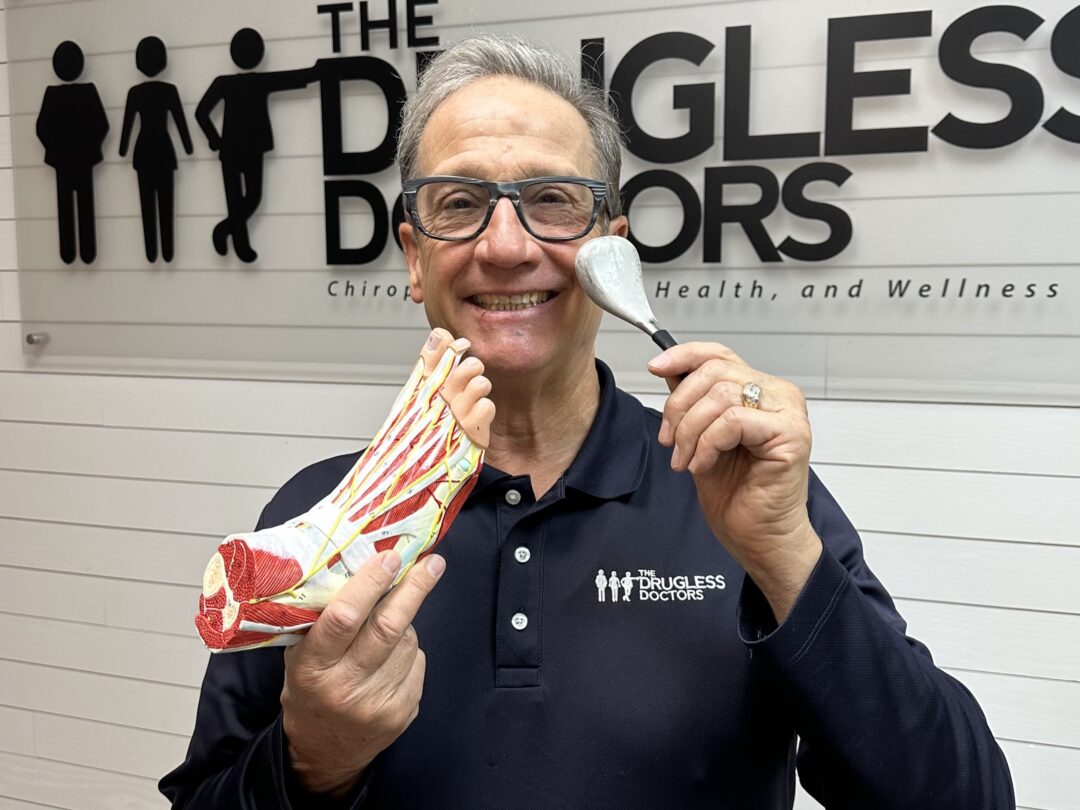
We also incorporate a pair of sensory stimulation mitts connected to one of the supportive modalities utilized in our treatment protocol.
The intensity is gradually increased while the mitts are applied to either the hands or feet.
Patients with more advanced sensory loss may demonstrate reduced perception of the stimulation.
With patient permission, the mitts may briefly be applied to an area of more normal sensation, such as the face, allowing the patient to compare the difference in sensory perception.
Many individuals are surprised by the degree of sensory loss present in the hands or feet once the comparison is demonstrated.
Family members accompanying the patient are often equally surprised by the degree of sensory loss demonstrated during the evaluation.
Nitric Oxide & Oxygen Delivery
Nitric oxide plays a major role in circulation and oxygen delivery into tissues.
A pulse oximeter measures oxygen circulating within the blood, while nitric oxide physiology helps determine how efficiently oxygen is delivered into tissues and cells.
Nitric oxide depletion may contribute to:
• cold feet
• burning sensations
• tingling
• delayed healing
• impaired circulation
Heart Sound Recorder (HSR) & Circulation Physiology
Another assessment tool utilized in the practice is a digital Heart Sound Recorder (HSR).
The HSR may help identify cardiovascular stress patterns, circulation inefficiencies, and physiologic changes involving blood flow dynamics.
Circulation Observations & Body Signals
Observation is extremely important during the neuropathy evaluation.
Body signals may include:
• blue or purple appearing toes
• thickened toenails
• reduced toe hair
• sock indentations
• hemosiderin staining
• varicose veins
• spider veins
• poor balance or gait instability
• cold hands or feet
The Drugless Doctors Three-Tier Supportive Strategy
The supportive strategy utilized in the practice is designed to improve circulation, support tissue oxygenation, reduce inflammatory stress, improve nutritional stability, and support nerve recovery physiology.
The program commonly focuses on:
• biochemical support
• biovascular support
• biostructural support
Photobiomodulation Support
One of the foundational supportive modalities utilized in the practice is FDA-cleared photobiomodulation therapy using the 15-watt TheraRay device.
Photobiomodulation utilizes specific light frequencies designed to support circulation, nitric oxide physiology, mitochondrial activity, tissue oxygenation, cellular energy production, and microcirculation.
Nerve Damage Severity Chart
The nerve damage severity chart utilized in the practice categorizes sensory loss into acute, moderate, severe, and permanent nerve damage patterns.
The earlier neuropathy is identified and addressed, the greater the potential for circulation recovery, sensory improvement, and stabilization.
Patient Summary
Peripheral neuropathy is often a whole-body circulation, metabolic, inflammatory, and neurologic condition involving impaired oxygen delivery, reduced microcirculation, inflammation, glucose instability, and nerve stress physiology.
The objective is not merely symptom masking.
The goal is supporting circulation, tissue oxygenation, nerve physiology, nitric oxide activity, mitochondrial function, sensory recovery, and long-term metabolic stability.
References
- Callaghan BC, Cheng HT, Stables CL, Smith AL, Feldman EL. Lancet Neurol. 2012.
- Pop-Busui R, et al. Diabetes Care. 2017.
- Ignarro LJ. Proc Natl Acad Sci USA. 1992.
- Bryan NS, Loscalzo J. Nitric Oxide and the Cardiovascular System.
- Hamblin MR. AIMS Biophys. 2017.
- Oyenihi AB, et al. Int J Mol Sci. 2015.
- National Institute of Neurological Disorders and Stroke (NINDS).
- Mayo Clinic Staff. Peripheral neuropathy symptoms and causes.
- Clifford PS, Hellsten Y. J Appl Physiol.
- McGee S. Evidence-Based Physical Diagnosis.
Schedule Your Neuropathy Appointment
Schedule an evaluation to see if neuropathy will work for you.